
Dubai has evolved from a regional trading post into a global business, tourism, and finance powerhouse. If you’re weighing where to deploy capital next, here are ten evidence-backed reasons Dubai deserves a serious spot on your shortlist—plus a couple of quick charts you can reuse in your deck.
1) Unmatched global connectivity
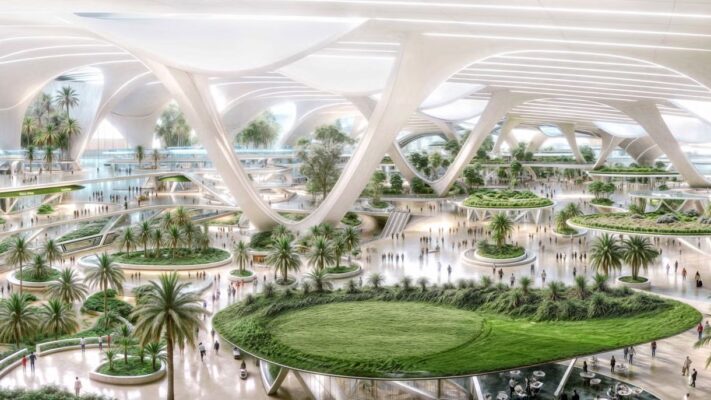
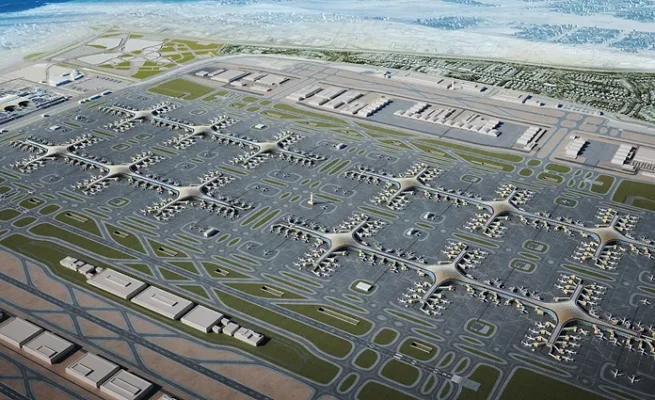
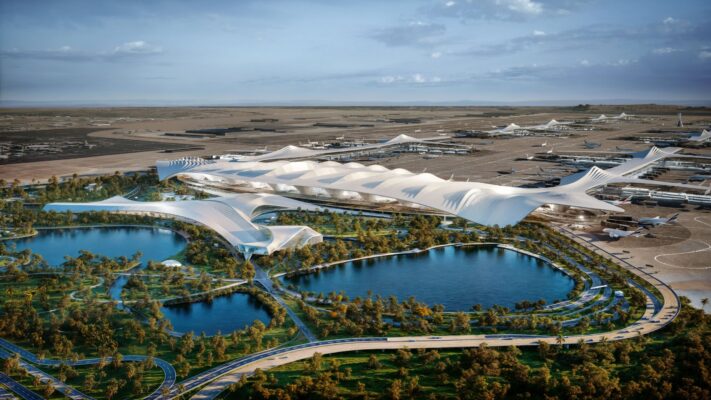
Dubai is a same-flight-day hub connecting East and West, and it’s doubling down: the government approved a massive expansion of Al Maktoum International (DWC), ultimately targeting \~260 million passengers per year, five parallel runways, and \~400 gates—positioning it as the world’s largest airport by capacity.
2) Pro-business taxes & treaties
The UAE introduced a 9% federal corporate tax in 2023, still low by global standards, and complements it with an extensive tax treaty network—~190 double-tax and investment treaties—to reduce withholding and avoid double taxation for cross-border investors.
3) 100% foreign ownership & investor-friendly structures
You can now own 100% of mainland companies across most activities (no local-sponsor requirement), and free zones continue to offer 100% ownership plus streamlined import/export and profit repatriation benefits.
4) Deep, growing financial hub (DIFC)
Dubai International Financial Centre has become MENA’s leading financial ecosystem, with 6,900+ active firms by end-2024 and continuing growth into 2025 (asset managers, fintech, banks, insurers). It’s one of the clearest signals of sustained, high-quality corporate demand.
5) Tourism engine that feeds demand
International visitors have rebounded beyond pre-pandemic levels. Dubai welcomed \~18.7 million overnight visitors in 2024, up from 17.15m in 2023—supporting retail, F\&B, entertainment, and short-let real estate yields. 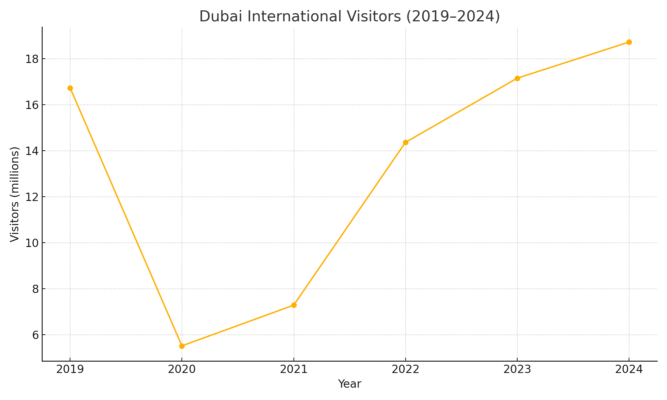
6) Scale infrastructure—ports, airports, and logistics
Beyond airports, Dubai’s integrated logistics (Jebel Ali Port + JAFZA free zone) underpins efficient regional distribution. The new “airport city” vision around DWC reinforces multi-modal connectivity and long-term capacity for cargo and passengers.
7) Consistent FDI magnetism
Dubai ranked among the world’s top cities for greenfield FDI in 2024, drawing thousands of projects and capital into tech, finance, and advanced services—evidence that multinationals and scale-ups choose Dubai as a regional HQ and market-entry base.
8) Robust, clear rule-making (incl. digital assets)
For emerging sectors like Web3, Dubai’s Virtual Assets Regulatory Authority (VARA) runs a dedicated framework (rulebooks, marketing regulations, licensing) across most of the emirate—building legal clarity that many jurisdictions lack. Federal SCA coordination further aligns the regime.
9) Free-zone excellence and ecosystem quality
UAE free zones dominate global rankings. In 2024, JAFZA topped fDi Intelligence’s “Global Free Zones of the Year,” while DMCC earned “Best Knowledge Zone” and continues to rack up awards—useful signals of service quality and investor support.
10) Talent, visas & lifestyle that attract and retain
Dubai’s Golden Visa offers 10-year residency for qualifying investors, entrepreneurs and professionals; property investors may also qualify under defined thresholds. The combination of safety, lifestyle, schools, health care, and connectivity helps companies recruit globally at speed.
Putting it together
Hard infrastructure (airports/ports/logistics) and soft infrastructure (regulation, treaties, visas) work in tandem.
Market depth is visible in tourism numbers, free-zone rankings, DIFC growth, and sustained FDI inflows.
Exit optionality improves with regional access to GCC, Africa, South Asia, and beyond—within same-day flight times from a single HQ.
