
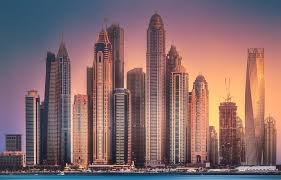
From Gazelles and tents to spring water and sunrise, the names of the UAE’s emirates come from Arabic roots, local legends, and geography. Here’s a friendly deep-dive you can read (or teach!) in one sitting.
Here are the stories behind the names of all seven emirates:
1. Abu Dhabi (أبوظبي) — “Father of the Gazelle”
The capital of the UAE, Abu Dhabi, owes its name to a **gazelle**. Legend says that hunters once followed a gazelle to a water source on the island, which later became the heart of the settlement. The Arabic term *Abu* means “father of/with,” while *Dhabi* means “gazelle.” The graceful animal remains a symbol of the emirate’s heritage.
Essence of the name: A land discovered thanks to the gazelle.
2. Dubai (دبي) — a name wrapped in several theories
Dubai’s name is one of the most debated. Some historians link it to the Arabic word *daba*, meaning “to creep” or “slow movement,” symbolizing the lazy flow of the Dubai Creek. Others believe it came from *dubayy*, an old word for **locust**. Ancient travelers also recorded “Dubayy” in their writings.
Essence of the name: A place tied to nature’s rhythm—whether locusts or the creek’s slow waters.
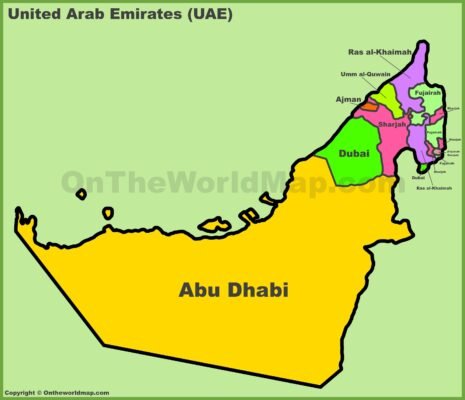
3. Sharjah (الشارقة) — “Of the East / Rising”
Sharjah’s name is connected to the Arabic root *sh-r-q*, which means “to rise” or “east.” The emirate lies in the eastern part of the UAE, making the interpretation fitting. Many say Sharjah was named for its position relative to other Gulf towns and its association with the **rising sun**.
Essence of the name: The emirate of sunrise.
4. Ajman (عجمان) — linked to **Ajam** (“non-Arab/foreigners”)
Ajman’s name originates from the Arabic word *Ajam*, which historically referred to **non-Arabs** or foreigners, particularly Persians. Since Ajman was a coastal hub of trade where merchants from Persia and beyond visited, the name reflects its multicultural past.
Essence of the name: A trading hub influenced by “foreign tongues.”
5. Ras Al Khaimah (رأس الخيمة) — “Headland of the Tent”
The name is a combination of *Ras* (head/headland) and *Khaimah* (tent). Sailors say a large tent once stood on the headland, serving as a beacon for those at sea. Another legend tells of a chief who kept a lantern on his tent to guide passing ships.
Essence of the name: A guiding landmark for sailors at the country’s northern tip.
6. Umm Al Quwain (أم القيوين) — “Mother of the Two Powers”
Derived from *Umm al-Quwatayn*, meaning “Mother of Two Powers,” this emirate’s name reflects the dual strengths of its people—**land and sea**. Its history is tied to both farming and seafaring, highlighting the balanced livelihood of the community.
Essence of the name: A place empowered by two great resources: earth and water.
7. Fujairah (الفجيرة) — “Springs that burst forth” (most cited view)
Fujairah’s name is believed to come from *fajr* or *fujairah*, meaning “to burst” or “gush forth,” referencing the **springs and fresh water** that flowed from the Hajar Mountains. Its fertile valleys and access to natural water made it a vital settlement for early inhabitants.
Essence of the name: A land blessed with gushing springs.
🌍 The Beauty of Names in UAE Heritage
The UAE’s emirates are more than borders; they are **living stories etched in language and memory**. From gazelles and locusts to tents and springs, each name offers a glimpse of how geography, folklore, and trade shaped this land. Together, these names form a cultural mosaic that reflects the UAE’s deep-rooted identity.
Why the stories differ (and why that’s okay)
Across the Gulf, place-names often **blend language roots with oral history**. Many settlements were small, mobile, or seasonal; scribal records varied by traveler and era. So you’ll find **multiple plausible strands**—especially for Dubai and Fujairah—each illuminating a piece of the past rather than contradicting it.
